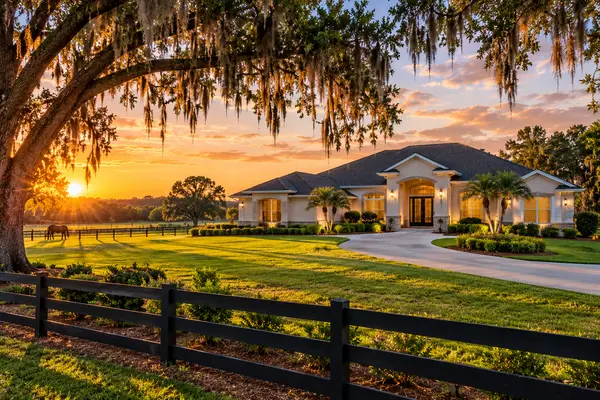
Key West, FL Coastal Home Buyer's Guide
Buying a coastal home in Key West is not like buying property anywhere else in Florida. Median sale prices sat at roughly $1.3 million for the three months ending June 2026, and average marketing times have stretched past 100 days, yet active inventory keeps shrinking. The island runs on limited land, strict development caps, and a globally recognized lifestyle brand, all of which keep prices near all-time highs even as buyer timelines grow longer.
Whether you are drawn by the historic charm of Old Town, the deep-water boating access of Key Haven, or the quiet estate streets of Casa Marina, buyers who understand flood zone classifications, short-term rental licensing rules, and Rate of Growth Ordinance constraints before making an offer consistently negotiate from a stronger position.
How Key West Coastal Real Estate Is Priced
Key West coastal home prices are shaped by scarcity more than by season or national interest-rate cycles. Strict development limits and a finite supply of waterfront land prevent meaningful new inventory from entering the market, which is why prices have essentially doubled since 2019 even as much of Florida has softened.
In the three months ending June 2026, Key West recorded a median sale price of roughly $1.3 million, up approximately 28% year over year, according to aggregated MLS listing data. The average sale price across the Florida Keys reached $1,432,069 in Q1 2026, a gain of 8.7% over Q1 2025, according to Florida Keys MLS residential data.
Within the luxury tier, the entry price for the top 10% of the Key West market starts above $5 million as of early 2026, based on luxury segment market data compiled for the period. Properties with open water views, deep-water dockage, privacy, and move-in condition consistently command the strongest prices, while homes missing one or more of those attributes face more negotiation.
Worth noting for buyers right now: through May 2026, the market recorded 206 home sales compared with 199 during the same period in 2025, a 3% gain in activity. Days on market have stretched, however, reaching an average of around 103 days from listing to contract in Key West by mid-2026, roughly 29% longer than the prior-year pace. That additional time is not a sign of weakness. It reflects buyers taking a more deliberate approach, which translates to more room for questions, thoughtful negotiation, and thorough due diligence before closing.
Choosing the Right Key West Neighborhood for Coastal Living
The neighborhood you choose in Key West determines nearly everything about the ownership experience: lifestyle, renovation rules, rental potential, and resale character. The island is small, but the differences between its districts are significant.
The five primary residential districts each serve a different buyer profile:
| Neighborhood | Primary Character | Price Level | Core Advantage | Best Suited For |
|---|---|---|---|---|
| Old Town | Historic Conch cottages, walkable streets | Highest price-per-sq-ft | Cultural identity, irreplaceable architecture | Buyers seeking quintessential Key West character |
| Casa Marina | Larger lots, grander homes, Atlantic-adjacent | Upper tier | Space, privacy, beach proximity | Luxury buyers wanting more room than Old Town |
| Midtown | Mid-century homes, larger lots | Mid-range | Year-round resident feel, fewer preservation rules | Full-time occupants and value-focused buyers |
| New Town | Modern construction, suburban feel | Lower entry point | Schools, services, fewest overlay restrictions | Families and practical full-time residents |
| Key Haven / Canal-front | Direct boating access, private docks | Below oceanfront | Deep-water access without oceanfront pricing | Boating-focused buyers |
Old Town is the historic heart of the island, built around Conch-style cottages, gingerbread trim, wraparound porches, and streets that double as walking postcards. It is the most walkable and culturally immersive part of Key West, and it carries the island's highest price-per-square-foot for standalone homes. Historic district rules govern exterior renovations, which both protects the character of the neighborhood and adds lead time to any improvement project.
Casa Marina sits closer to the Atlantic and is characterized by larger lots, grander homes, and quieter streets within walking distance of the beach. It draws luxury buyers who want more space and privacy than Old Town provides, while remaining firmly on the island.
Midtown offers mid-century homes on generally larger lots for a lower entry price. It carries a strong year-round resident feel and fewer preservation constraints, making it a practical choice for full-time occupants.
New Town is more suburban in character, with modern construction, proximity to schools and services, and the fewest historic overlay restrictions of any residential area on the island.
Key Haven and canal-front enclaves along canal-front streets offer direct boating access from private docks. Canal-front properties typically cost less than true oceanfront, though access to deep water can matter just as much as the view for boating-focused buyers.
Your choice of neighborhood should track directly with how you plan to use the property, because each district carries different rules around renovations, short-term rentals, and insurance exposure. Asking your agent for a side-by-side comparison of lifestyle and price points across districts is a practical early step, particularly for buyers unfamiliar with how much Key West's neighborhoods differ from one another despite the island's compact geography.
Understanding Flood Zones, Insurance, and Coastal Risk in Key West
Every coastal home buyer in Key West confronts two non-negotiable cost categories: flood insurance and windstorm coverage. Treating either as an afterthought typically results in a significant budget surprise after closing.
Flood insurance is required for most homes with a federally backed mortgage, and virtually all of Key West sits within a designated FEMA flood zone. The island has participated in the National Flood Insurance Program (NFIP) since 1971, according to the City of Key West Floodplain Management page. Premiums under NFIP's current rating methodology are property-specific rather than zone-wide, calculated on factors including building elevation, construction type, proximity to water, and flood frequency. For coastal VE-zone properties (the highest coastal designation), NFIP examples range from roughly $4,000 to $12,000 per year, with private flood alternatives sometimes reaching higher or lower depending on the property's specific profile.
Windstorm coverage is a separate policy from standard homeowners insurance, and it is the category that catches many buyers by surprise. Key West's position at the tip of the Florida archipelago puts it squarely in the zone where wind coverage is both essential and priced accordingly.
The practical takeaway: get an insurance quote tied to a specific property and flood elevation certificate before making an offer, not after. The combined insurance carry cost for a waterfront Key West home can materially change the economics of ownership.
Short-Term Rental Rules: What Coastal Buyers Need to Know
Short-term rental capacity is one of the most asked-about topics among buyers considering a Key West coastal home, and the regulatory landscape here is among the most restrictive in Florida.
In most residential areas of Monroe County, rentals of fewer than 28 consecutive days are prohibited entirely. The Monroe County Special Vacation Rental Program specifies that properties in Improved Subdivision (IS), Urban Residential Mobile Home (URM), and IS-M land use districts may not be used as short-term rentals, and that all short-term rental permits are non-transferable upon change of ownership. Key West's city limits operate under a separate transient license system: short-term rentals are legal only on properties that hold a Transient License, and the supply of those licenses is capped. As of June 2025, the City of Key West confirmed approximately 870 active transient licenses in the city's licensing system, according to the City of Key West. Licensed properties command a meaningful premium over otherwise comparable homes without one, with transient licenses known to add substantial value in transactions where that income potential transfers.
If rental income is part of your ownership strategy, confirming the property's current license status, the city's zoning designation, and the transferability of any existing license is a due-diligence step that belongs before the offer stage, not in it.
Buyers purchasing purely as a primary or vacation residence unrelated to short-term rental income are not affected by these restrictions in the same way, but understanding the rules still matters because they shape what your neighbors can and cannot do, which affects the neighborhood character you are buying into.
Property Types in Key West: Ownership Rules, Renovation Constraints, and Value Drivers
Key West's primary property types each carry distinct ownership rules and renovation constraints that shape the buying decision as much as location and square footage do. Historic Conch homes, canal-front houses, open-water oceanfront properties, condos and townhomes, and gated community units like Truman Annex all sit within regulatory frameworks that a buyer needs to understand before making an offer.
Historic Conch homes in Old Town and surrounding neighborhoods derive much of their value from irreplaceability and cultural identity. Renovation requires navigating the Historic Architectural Review Commission (HARC), which reviews proposed exterior changes against preservation guidelines. HARC approval adds lead time to any improvement project, and buyers should factor that process into both renovation budgets and timelines before closing.
Canal-front single-family homes offer dock access in a more contained ownership package than open-water properties. Canal depth matters considerably for powerboat owners and should be verified through permit records before purchase. Dock permit history and seawall condition are both property-specific items that a knowledgeable buyer's agent will investigate before an offer is submitted.
Oceanfront and open-water homes command the highest prices on the island. The combination of open views and protected access consistently outperforms properties with only one of those attributes. Buyers should confirm that any existing dock structures hold current permits, as unpermitted improvements can complicate both financing and future resale.
Condos and townhomes exist across all price tiers and offer a lower-maintenance coastal ownership experience. The due-diligence focus here is different from single-family homes: HOA financials, reserve fund adequacy, and any restrictions on occupancy or short-term rentals deserve careful review, because under-funded reserves and rental restrictions can both affect resale value.
Truman Annex, a gated enclave near Old Town, has historically attracted second-home buyers who want historic-district adjacency with the lock-and-leave convenience of a maintained community. Buyers should be aware that transient rental licenses for Truman Annex properties were sunset in December 2025, according to the Keys Weekly, meaning short-term rental use in that enclave is no longer available regardless of prior license history.
Buying Process Considerations Specific to Key West
A few process realities set Key West coastal home purchases apart from transactions elsewhere in Florida.
Cash and financing mix: A significant share of Key West transactions, particularly at the upper end, involve buyers with substantial cash positions. If you are financing, work with a lender who has experience with jumbo loans in Florida coastal markets, and factor flood and wind insurance premiums into your pre-approval numbers from the start. An affordability calculator can help you model the full monthly carry cost, including insurance, before committing to a price range.
Title and ROGO: Key West operates under a Rate of Growth Ordinance (ROGO) allocation system that limits new construction. This means the resale market is where most buyers operate, and the supply pipeline for new product is structurally constrained.
Elevation certificates: Properties in AE and VE flood zones require an elevation certificate, which measures the structure's first finished floor relative to the Base Flood Elevation. This document directly determines flood insurance pricing and should be obtained for any property you are seriously considering. FEMA's Flood Map Service Center (msc.fema.gov) is a useful starting point for understanding a specific property's flood zone designation before ordering the full certificate.
Seasonal market rhythms: The Key West market moves with weather and tourism patterns. Peak season runs roughly November through April, when more buyers are physically on the island and competition tends to be higher. The summer months often present opportunities for buyers willing to be active when fewer competitors are looking, as sellers who list in the off-season frequently have genuine reasons to transact.
Working with a buyer's agent: In a market as specialized as Key West, the right buyer's agent is not just a convenience but a practical necessity. Transient license status, canal depth records, dock permit history, seawall condition, ROGO allocations, and historic preservation constraints are all property-specific details that a knowledgeable local agent investigates as a matter of course, before an offer is submitted.
For buyers relocating from outside the region, an experienced agent can also provide context on which neighborhoods match a given lifestyle and budget, and which properties are genuinely well-priced versus extended on the market for structural reasons. Understanding the full buying process, from initial search through to closing, is worth reviewing before your first offer.
What the Key West Coastal Market Looks Like Right Now
As of mid-2026, Key West real estate is adjusting rather than declining. The inventory of active residential listings in the Florida Keys dropped approximately 9.5% compared to June 2025, according to Florida Keys MLS submarket data. Fewer listings mean fewer choices for buyers, and that supply constraint is the primary engine keeping prices elevated despite extended marketing times and higher interest rates.
The luxury segment above $2 million has been particularly active. The $2M to $3M price range posted 32% growth year over year through May 2026, while the $4M-and-above segment grew 8% over the same period, according to aggregated MLS listing data. The sub-$1M tier contracted 10% year over year, reflecting the long-running trend away from entry-level inventory on the island.
For buyers, the current environment offers something that was scarce during the post-pandemic frenzy: time. Longer average days on market, more inventory relative to the 2021 and 2022 lows, and sellers who need a real strategy rather than a weekend bidding war means that thoughtful, prepared buyers have genuine room to negotiate on condition, timing, and price concessions where properties are not positioned correctly.
When you are ready to review available listings, exploring available Florida Keys inventory provides a practical starting point for evaluating real-time options across every price tier.
FAQ: Key West Coastal Home Buyer's Guide
What is the typical price range for a coastal home in Key West, FL?
Prices span a wide range depending on waterfront type, neighborhood, and condition. Canal-front single-family homes generally occupy the mid-tier of the waterfront market, while open-water oceanfront properties and historic Old Town estates with dock access anchor the upper range, with trophy properties listed well above $10 million. The median sale price across Key West came in at roughly $1.3 million during the three months ending June 2026, based on aggregated MLS listing data for the period.
Do I need flood insurance when buying a home in Key West?
For virtually every buyer, the answer is yes. Nearly all of Key West falls within a FEMA-designated flood zone, and the island has participated in the National Flood Insurance Program since 1971, according to the City of Key West Floodplain Management page. Lenders with federally backed loans require coverage for properties in high-risk zones, and buyers paying cash should still price flood and windstorm premiums into their total ownership cost before settling on an offer price.
Can I rent out my Key West home on a short-term basis?
Only if the property carries a valid Transient License and the zoning classification permits it. Under the Monroe County Special Vacation Rental Program, a 28-day minimum rental period applies to most residential areas, and vacation rental permits in Monroe County are non-transferable when ownership changes hands. In Key West proper, the city's transient license supply is capped at roughly 870 active licenses, and licensed properties carry meaningful premiums. Verifying license status, zoning, and the rules around transfer should happen before any offer is submitted.
How is Key West real estate different from the rest of the Florida Keys?
The main differences are in price floors, historic density, and rental regulations. Key West is the southernmost point in the continental U.S. and carries a globally recognized lifestyle brand that separates it from other Keys markets. It has a denser mix of historic properties, stricter preservation rules, a more established tourism economy, higher price floors across all property types, and tighter restrictions on short-term rentals. The island also supports a larger population of full-time residents relative to other Keys communities, which sustains year-round amenities that markets further north along U.S. 1 do not match.
What neighborhoods should a coastal buyer focus on in Key West?
The right neighborhood depends primarily on how you plan to use the property. Old Town suits buyers who prioritize historic character and walkability. Casa Marina appeals to those who want larger lots and quieter streets near the Atlantic. Midtown offers a practical, year-round feel with more accessible entry points. Key Haven and canal-front enclaves serve boating-focused buyers. Each district carries different renovation rules, rental regulations, and insurance exposure profiles, which means neighborhood selection is inseparable from your intended use.
How long does it take to buy a home in Key West right now?
Considerably longer than it did two or three years ago. Average time from listing to contract reached approximately 103 days by mid-2026, based on aggregated MLS listing data. That extended timeline works in a prepared buyer's favor: more room to evaluate properties carefully, request relevant documents, and negotiate on condition or pricing where a listing has been sitting for the wrong reasons.
Recent Posts